

Abstract: IDC Flat Cables, also known as ribbon cables, are critical components in modern electronic systems. This article provides a comprehensive guide on IDC Flat Cable specifications, practical applications, and frequently asked questions, aiming to optimize connectivity solutions in a variety of industries. Insights are backed by technical details and professional guidance from JYE.
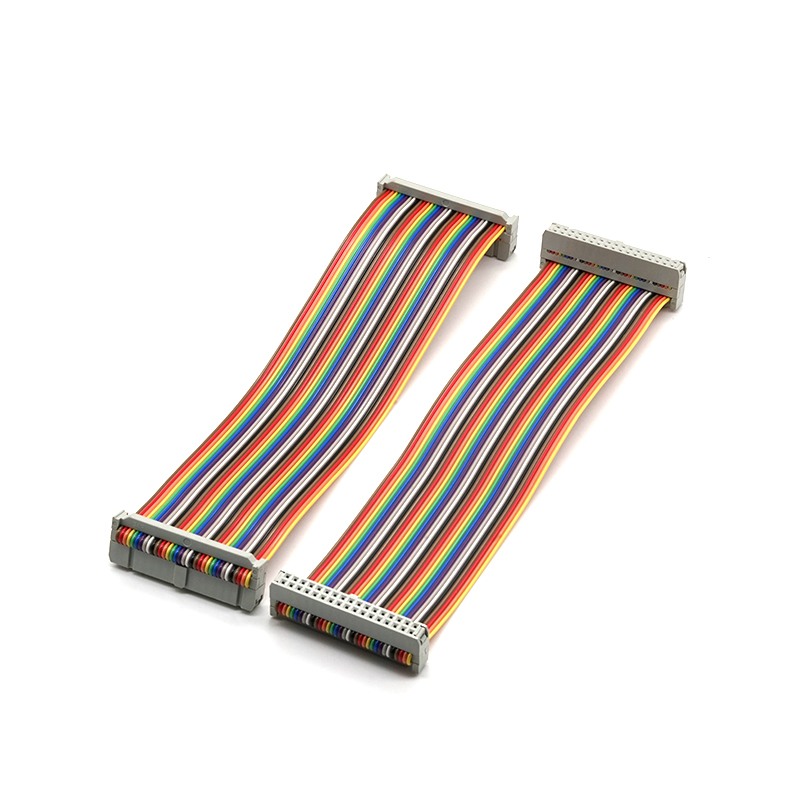
IDC (Insulation Displacement Connector) Flat Cables are widely used in electronic devices for efficient and organized signal transmission. Unlike traditional round cables, IDC Flat Cables consist of multiple conductors arranged in parallel and separated by insulation. Their unique construction allows for rapid mass termination without stripping the insulation, providing reliable connectivity in compact electronic assemblies.
This article aims to explain how IDC Flat Cables function, their detailed technical parameters, common challenges, and solutions to ensure optimal performance in diverse applications.
IDC Flat Cables are defined by the following parameters:
| Parameter | Description |
|---|---|
| Conductor Material | High-purity tinned copper, ensuring low resistance and durability |
| Insulation | Flexible PVC or LCP, rated for 80°C to 105°C operating temperature |
| Pitch | 0.025" (0.635 mm) to 0.1" (2.54 mm), depending on application |
| Number of Conductors | 2 to 64, customizable per project requirements |
| Voltage Rating | 300V AC/DC typical for internal electronics |
| Length | Standard 1m, 3m, 5m, or customized lengths |
| Termination | IDC connectors or soldered terminations as required |
These specifications ensure that IDC Flat Cables can meet high-speed signal requirements while maintaining mechanical stability in constrained spaces.
IDC Flat Cables are versatile and employed across various industries:
Understanding the selection criteria for IDC Flat Cables involves considering conductor count, pitch, insulation type, and environmental requirements. Proper application ensures reduced signal interference, simplified maintenance, and extended service life.
IDC Flat Cable organizes multiple conductors in parallel, maintaining consistent spacing that minimizes crosstalk and impedance mismatch. The insulation displacement connection eliminates exposed wire ends, reducing signal loss and ensuring stable electronic communication.
When installing IDC Flat Cables, ensure correct alignment with the connector to avoid bent conductors. Use a specialized insertion tool for mass termination. Avoid excessive bending or stretching, as it can compromise insulation integrity and electrical performance.
Yes, IDC Flat Cables can be customized in terms of length, number of conductors, pitch, and insulation type. Tailored solutions allow optimal routing within devices while maintaining compliance with voltage and temperature requirements.
Common failure modes include broken conductors, poor connector contact, and insulation wear. Use continuity testing and visual inspection to identify issues. Replacing damaged sections with certified cables restores signal reliability and system performance.
While both feature parallel conductors, IDC Flat Cables utilize insulation displacement connectors for rapid mass termination without stripping wires. This reduces installation time, improves mechanical stability, and enhances signal performance compared to older ribbon cable designs.
IDC Flat Cables remain a critical component for ensuring reliable electronic connectivity across computing, telecommunications, industrial, and consumer applications. Their technical advantages, such as parallel conductor alignment, insulation displacement termination, and customizable specifications, address modern electronic challenges efficiently.
JYE provides high-quality IDC Flat Cables designed to meet industry standards and specific project requirements. For more information about sourcing, customization, or technical support, please contact us directly. Our team is ready to assist in selecting the optimal IDC Flat Cable solution for any application.


