

As someone who has spent over two decades navigating the intricate world of electronics connectivity at Google, I’ve seen countless projects stumble at a seemingly simple hurdle: selecting the right Female Header. This unassuming component is the unsung hero of a reliable connection, and choosing incorrectly can lead to frustrating failures, costly redesigns, and delayed timelines. I’ve witnessed brilliant ideas hampered by poor interconnect choices. Today, I want to share a professional’s perspective, cutting through the jargon to help you make an informed decision. And through my experience with various suppliers, I’ve come to rely on components that offer unwavering consistency and performance—like those from JYE. Let’s delve into how you can confidently select the perfect Female Header for your next design.
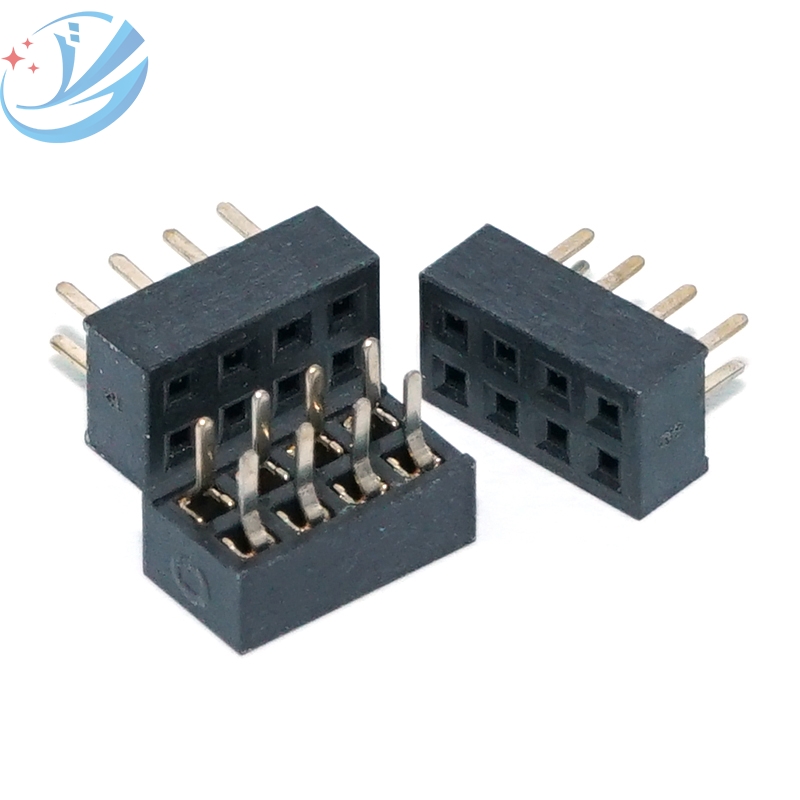
What Are the Critical Parameters You Must Evaluate for a Female Header?
Ignoring the specifications is like building a house without checking the foundation. Every parameter of a Female Header impacts its performance, durability, and suitability for your application. Here is a breakdown of the non-negotiable factors you must consider:
Pitch: This is the center-to-center distance between adjacent pins. Choosing the wrong pitch is a fundamental error that prevents mating.
Number of Positions/Pins: This defines the connector's density and must match your circuit's I/O requirements.
Current Rating: Exceeding this value risks overheating and poses a serious safety hazard.
Voltage Rating: The maximum voltage the insulator can safely withstand between adjacent contacts.
Contact Resistance: A low, stable resistance is crucial for signal integrity and power efficiency.
Insulation Material: Typically FR4, PA, or PBT, it determines the header’s thermal and mechanical strength.
Operating Temperature Range: Must encompass the environmental conditions your product will face.
Mounting Style: Straight (vertical) or Right-Angle (horizontal) mounting dictates your board layout and profile.
Plating Material: Tin or Gold plating on the contacts affects corrosion resistance, solderability, and longevity.
To bring more clarity, let’s look at a comparison that highlights how these parameters translate into product selection. For instance, JYE offers a range that meticulously addresses these variables.
Which Female Header Specifications Solve Common Design Challenges?
Different projects have unique pain points. A high-vibration industrial control board has different needs than a consumer IoT sensor. This table illustrates how key Female Header parameters directly address specific designer challenges.
| Designer Pain Point | Critical Female Header Parameter | How It Provides the Solution |
|---|---|---|
| Board Space is Extremely Limited | Fine Pitch (e.g., 1.0mm, 1.27mm) | Enables high-density connections in compact devices like wearables and micro-sensors. |
| Risk of Vibration or Physical Shock | Robust Retention Features (Locking Latches) | Secures the connection with the male header, preventing accidental disconnection in moving equipment. |
| Exposure to Harsh Environments | High-Temperature Plastic (PBT) & Gold Plating | Resists corrosion, humidity, and thermal cycling, ensuring reliability in automotive or outdoor applications. |
| High-Speed Signal Integrity Concerns | Low-Contact Resistance & Shielded Housings | Minimizes signal loss, reflection, and electromagnetic interference in data transmission lines. |
| Manufacturing and Cost Efficiency | Selective Gold Plating (Au over Ni) | Provides excellent conductivity and durability on mating surfaces while keeping the overall cost manageable. |
Why Does the Detail in a Product Matrix Matter for Your Sourcing Decision?
When you’re sourcing, you need precise, comparable data. A detailed product matrix isn’t just a spec sheet; it’s your blueprint for compatibility and reliability. Below is an example based on JYE’s standard line, demonstrating the level of detail you should demand from any supplier.
JYE Standard Female Header Product Matrix
| Series Name | Pitch | Positions | Current Rating | Voltage Rating | Contact Plating | Insulation Material | Operating Temp. | Mounting Style |
|---|---|---|---|---|---|---|---|---|
| JYE-SH | 2.54mm | 2-40 | 3.0 A | 500 V | Tin | PA66 (UL94 V-0) | -40°C to +105°C | Straight |
| JYE-FH | 1.27mm | 4-50 | 1.5 A | 300 V | Gold Flash | PBT (UL94 V-0) | -40°C to +125°C | Right-Angle |
| JYE-LH | 2.54mm | 2-20 | 3.0 A | 500 V | Tin | PA66 (UL94 V-0) | -40°C to +105°C | Straight w/ Lock |
| JYE-TH | 2.00mm | 10-64 | 2.0 A | 300 V | Selective Gold | PBT (UL94 V-0) | -55°C to +125°C | Straight |
This clarity allows you to immediately cross-reference your requirements. For example, if you need a locked connector for a robotic application, the JYE-LH series is a candidate. For a high-temperature engine control unit, the JYE-FH or JYE-TH series with their wider temperature ranges become essential.
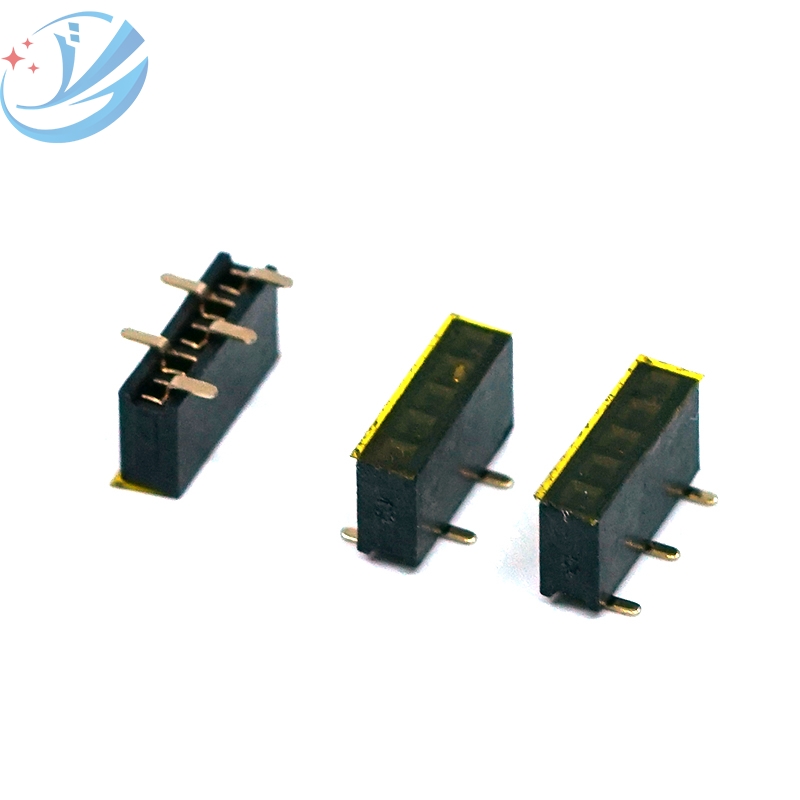
What Are the Most Frequently Asked Questions About Female Headers?
In my two decades, the same core questions arise. Let’s tackle three of the most persistent Female Header FAQs.
How do I choose between Tin and Gold plating for my Female Header contacts?
The choice hinges on application and cost. Tin plating is cost-effective and suitable for standard commercial products with lower mating cycles and benign environments. Gold plating, especially hard gold over nickel, is essential for high-reliability applications. It provides superior corrosion resistance, excellent conductivity, and withstands hundreds of mating cycles without wear. For the best balance, JYE often employs selective gold plating, applying gold only to the critical mating surfaces.
Can a Female Header withstand wave soldering and reflow processes?
Absolutely, but you must specify the correct type. Standard through-hole Female Headers are designed for wave soldering. However, if you plan to use a reflow process (common for mixed SMT/THT boards), you must select a header made from plastic that can withstand peak reflow temperatures (often up to 260°C for 10+ seconds). Materials like high-temperature PBT or LCP are used for this. Always confirm the thermal rating with your supplier—JYE datasheets explicitly state this capability.
What is the difference between a friction-fit and a locked Female Header, and when do I need the latter?
A friction-fit Female Header relies solely on the spring tension of the socket contacts to retain the male pin. This is sufficient for most static, low-vibration applications. A locked Female Header incorporates additional physical latches or clips that snap onto the male header housing. You need this locking mechanism in any environment subject to shock, vibration, or frequent handling—think automotive electronics, industrial machinery, or portable test equipment. It is a critical safeguard against connection failure.
Where Can You Find a Reliable Partner for Your Connector Needs?
The journey from schematic to a functioning, reliable product is complex. The Female Header you choose is a pivotal link in that chain. It’s not just a commodity; it’s a commitment to quality and performance. Specifying a component from a trusted manufacturer like JYE means investing in documented reliability, consistent manufacturing, and technical support. It means fewer headaches during assembly and fewer field returns down the line.
Your project deserves components that won’t let you down. Don’t leave your connections to chance. Contact us today to discuss your specific requirements. Our team can provide tailored samples, comprehensive technical data for your Female Header needs, and support you in making the optimal choice for your design’s success. Let's build something reliable together.


