

IDC flat cable is widely used in electronics, industrial automation, telecommunications, and computer systems because of its compact design, organized wiring layout, and dependable signal transmission. For engineers and buyers, choosing the right cable often means balancing durability, flexibility, connector compatibility, and installation efficiency. This guide explains how IDC flat cable works, where it performs best, and how JYE helps customers solve common connection challenges with dependable cable solutions.
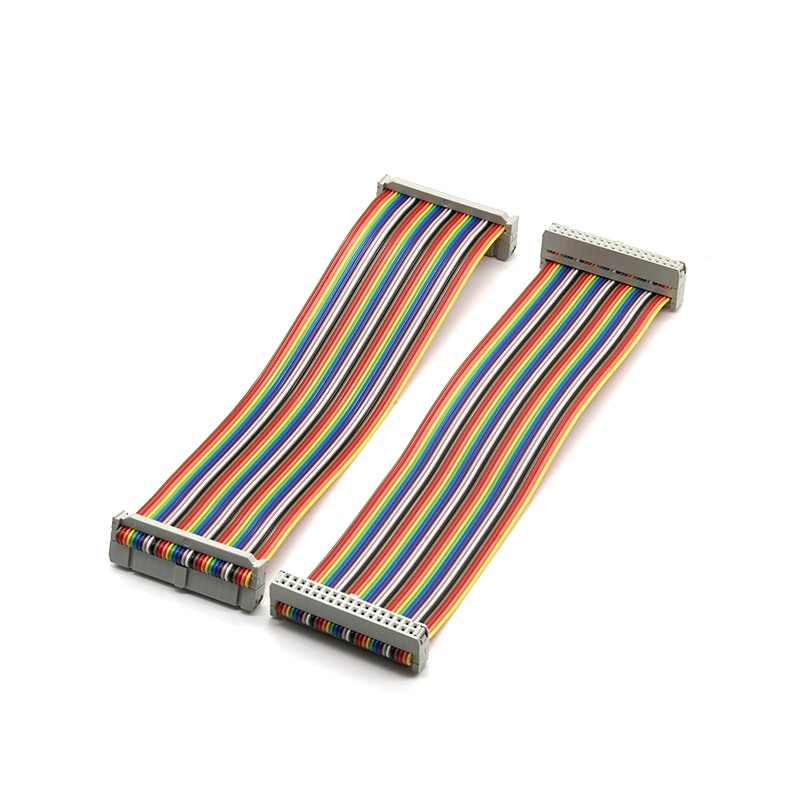
IDC stands for Insulation Displacement Contact. IDC flat cable consists of multiple parallel conductors arranged side by side in a flat ribbon format. Unlike conventional wire harnesses, IDC technology allows connectors to pierce insulation directly without stripping wires, making assembly faster and more efficient.
These cables are especially valued in applications where space-saving layouts, neat routing, and rapid connector termination are required.
IDC flat cable works by aligning flat ribbon conductors into specially designed IDC connectors. Metal contact blades inside the connector cut through insulation and establish direct electrical contact with each conductor.
This design reduces labor time while increasing wiring precision in high-density electrical systems.
IDC flat cables offer several advantages that make them preferred in many industries:
IDC flat cables are found in a wide variety of devices and industries:
Their versatility makes them ideal for both low-voltage signal transmission and organized multi-wire connections.
Selecting the correct IDC flat cable depends on several technical factors:
Incorrect cable selection may lead to signal instability, premature wear, or installation mismatch.
| Feature | IDC Flat Cable | Traditional Wire Harness |
|---|---|---|
| Installation Speed | Fast | Slower |
| Space Utilization | Excellent | Moderate |
| Wire Organization | Highly Structured | Variable |
| Maintenance Efficiency | Easy Identification | More Complex |
Many buyers face recurring issues when sourcing IDC flat cable. Here are the most common challenges:
JYE provides precision-manufactured IDC flat cable products designed for stable performance, long service life, and compatibility across demanding industries. With strong production control, strict quality testing, and customizable specifications, JYE helps customers reduce downtime and improve assembly efficiency.
Whether you need standard ribbon cable assemblies or tailored cable solutions for specialized equipment, JYE delivers reliable products built to meet practical engineering demands.
1. What is the main advantage of IDC flat cable?
Its biggest advantage is fast, error-reducing installation without stripping wire insulation.
2. Can IDC flat cable be customized?
Yes, conductor count, pitch, length, and connector type can all be customized.
3. Is IDC flat cable suitable for industrial equipment?
Absolutely. It is widely used in automation, control panels, and machinery systems.
4. How do I ensure connector compatibility?
Match cable pitch, conductor count, and connector pin layout precisely.
5. Where can I learn more about product specifications?
You can visit JYE’s official IDC flat cable product page for detailed technical information.
If you are looking for dependable IDC flat cable solutions that improve connection stability and production efficiency, JYE is ready to support your project with expert manufacturing and responsive service. Contact us today to discuss your requirements and find the right cable solution for your application.


